Protected by Copyscape Website Copyright Protection

Saturday, August 7, 2010

Plavadi Sastha


One of our friends, Mr.Kamesh from Mumbai wanted to know about Plavadi Sastha temple... 


Mr.Srinivasan from Mumbai was also asking me about this temple for a long time...


Let me try to present few facts which are available 

V. Aravind Subramanyam
-----------------------
Plavadi Sastha

Plavadi sastha is one of the oldest Sastha shrines located near the banks of Tamrabarani... This beautiful temple is near kallidaikurichi, (near tirunelveli).


Swami is Swayambhu here who is very much pleased in sitting under a pala maram (jack fruit tree). Swami doesnt have any swaroopam here.. instead he is worshipped in the form of a lingam; 

There are Three lingams ie Sastha in centre and on either sides Poorna and Pushakala - His consorts.

A idol of an elephant, His vahana is found infront of Swami. There is a peetam nearby Sastha which may be Lord Boothanatha.

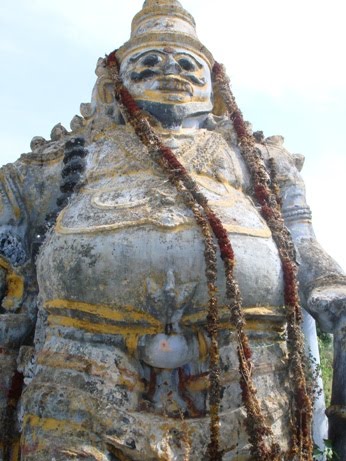
The temple also houses a huge figure of Parivara....

Though there is a temple compund, Sastha is worshipped in the open space - just under the shelter of the Jack tree.. (Jack =Pala; ie Palavadi = Plavadi)  without any sanctum sanctorum and Swami prefers to be in rain and sun than inside the Garbha gruham

Swami is very powerful here and Kshipra Prasadi [ NOT ONLY HERE !!!! ALWAYS !!! :)  ]

This is an age old temple and Plavadi Sastha is the Kuladevivam of many people who live allover the globe. 

The interesting and amazing fact about this temple - during any special puja to the Lord, after the puja, if He is satisfied with the worship, exactly three leaves from the Jack tree fall on the figures of Sastha-Poorna and Pushkala....

Since you dont have any facilities here... people halt at Kallidaikurichi and then come to this temple for worship.

Heard that the temple's Kumbabishekam happened very recently (last month)


Iam searching the additional information.. if anything available I shall update it immediately. 

Friday, August 6, 2010

Shri Chandikayin Charitham - Story of Goddess Durga in Tamil

Shri Chandikayin Charitham - Story of Goddess Durga in Tamil

Devi Mahatmya of Markandeya Purana describes the greatness of Chandika Devi. The glory of Devi is beyond words. This story was given by Rishi Sumedhas.

She incarnated Thrice - First to kill Madhu and Kaidabha and then to destroy Mahishasura and then to annihinlate Sumbha and Nisumba...

This story of Chandika Devi is brought in Tamil written by V.Aravind Subramanyam as Shri Chandikayin Charitham, for the devotees of Durga who are are interested in learning the divine mother's story but do not understand Sanskrit or who could not do the parayanam of Devi Mahatmyam (Durga Saptashati)

This book discusses the entire Devi Mahatmyam, without deviating from the Original text.

The book also has the collection of slokas and other informations on Devi.

Worshipful Acharyas has blessed the book with their Blessing Note.

Along with the book a wonderful picture of Chandika Prabhavam is also given, which may be used for worship. This picture is created based on the intricate details given in the Rahaysa Traya of Devi Mahatmyam.

As you may already know,  Our previous release Shri Lalithayin kathai explained the glory of Goddess Lalitha and Shri Maha Satha Vijayam described the greatness of Lord Sastha. You all will remember how the book was a commendable work and Magnum Opus on the Lord. The book Lalithayin Kathai was a extraordinary success which went for second edition within a span on 4 months.

Now, Maha Sasthru Seva Sangam is bringing out the book titled 'Chandika Charitham' (Tamil). Thru this we wish to reach out out more devotees and spread the glory of the Lord.

It will not be an ordinary or regular book, but a worthy book TO PRESERVE.

Contemplating on the divine leelas of the divine mother Durga, gives one the taste of divine nectar itself .

Interested devotees may avail this opportunity and obtain the divine grace of Shri Matha.

The cost of the book is Rs.100/-

Those who need a copy may contact:
V.Aravind Subramanyam,President, Shri Maha Sasthru Seva Sangam,
94 B, Third Street, Tatabad, Coimbatore 641012.
(Tel: +91- 99946 41801 E-mail: aravindsai@gmail.com)

Thursday, August 5, 2010

தடி கொண்ட ஐயனார்.


உவெசாமிநாதய்யர் எழுதியுள்ள 'நல்லுரைக் கோவை'யில் இந்தக் கட்டுரை காணப்படுகிறது. 

தடி கொண்ட ஐயனார். 

புதுக்கோட்டையில் மார்த்தாண்ட பைரவபுரம் என்ற
பெரிய தெரு ஒன்று இருக்கிறது. அது சேஷையா சாஸ்திரிகளால் 
உண்டாக்கப்பட்டது. (சேஷையா சாஸ்திரிகள் பற்றிய இழை 
அகத்தியத்தில் இருக்கின்றது. கொஞ்சம் தேடிப் பார்த்தால் 
அம்புடும். சேஷையா சாஸ்திரிகள் புதுக்கோட்டை சமஸ்தானத்தின் 
திவானாக இருந்தவர்.) 


அங்கே, முன்பு ஓர் ஆலமரமும் அதன்கீழே ஐயனார் 
கோயிலொன்றும் இருந்தன. அவ்வையனாருடைய பெயர் 
'தடிகொண்ட ஐயனார்' என்பது. மார்த்தாண்ட பைரவபுரத்தை 
உண்டாக்குவதற்கு முன் அங்கே சாலையை அமைக்கவேண்டியிருந்தது. 
சாலைக்கு முற்கூறிய ஆலமரமும் கோயிலும் தடையாக இருந்தன. 
ஆலமரத்தை வெட்டிவிட்டு, தடிகொண்ட ஐயனாரை வேறிடத்திற்குக் 
கொண்டுசென்று பிரதிஷ்டை செய்துவிட்டால் தாம் உத்தேசித்த 
காரியம் நன்றாக நிறைவேறுமென்று சாஸ்திரியார் எண்ணினார். 
உடனே வேறிடத்தில் அழகிய கோயிலொன்றைக் கட்டுவித்தார். 
ஐயனாரை அங்கே எழுந்தருளச் செய்விப்பதற்கு வேண்டிய 
முயற்சிகளைச் செய்தார். சிலர் அங்ஙனம் செய்தல் தகாதென்று 
தடுத்தனர். 


சாஸ்திரியார், "நான் நல்ல காரியத்தை உத்தேசித்துத்தான் 
இதைச் செய்கிறேன். ஐயனாரிடத்தில் மற்றவர்களுக்கு இருக்கும் 
பக்திக்கு என்பக்தி சிறிதேனும் குறைந்ததல்ல. என்னுடைய 
முயற்சியை ஐயனார் அங்கீகரித்து அருள்வார் என்ற உறுதி 
எனக்குண்டு", என்று அவர்களைப் பார்த்துக்கூறினார். பிறகு 
ஐயனாருக்கு ஒரு விண்ணப்பம் எழுதி அவர் முன்பு வைக்கச்செய்து 
நமஸ்காரம் செய்தார். 


அதன் சாரம் வருமாறு: 

'கலியுகத்தில் கண்கண்ட தெய்வமாகிய ஸ்ரீஐயனாருடைய 
பாதாரவிந்தங்களில் அடியேன் சேஷையா சாஸ்திரிகள் பலகோடி 
நமஸ்காரங்கள் செய்து சமர்ப்பிக்கும் விண்ணப்பம். 
நகரத்தைப் பாதுகாக்கும் பொருட்டு எழுந்தருளியிருக்கும் 
தேவரீர் இந்த நகரத்தைப் பாதுகாக்கும் கடமையை வகிக்கும் 
அடியேன், தேவரீருடைய ஆக்ஞையை எதிர்பார்த்துச் சில காரியங்கள் 
செய்துவருகிறேன். இந்த இடத்தில் ஒரு தெருவையும் சாலையையும் 
உண்டாக்க எண்ணியுள்ளேன். அந்தச் சாலை நேராகச் செல்வதற்கு 
இந்த ஆலமரம் தடையாக இருக்கிறது. தேவரீருக்குத் தனியாக ஓர் 
அழகிய கோயிலைக் கட்டச்செய்திருக்கிறேன். நெடுங்காலமாக 
இந்தப் பழைய கோயிலில் மழையால் நனைந்தும் வெயிலால் உலர்ந்தும் 
எழுந்தருளியிருக்கும் சிரமம் நீங்கி அக்கோயிலில் எழுந்தருள வேண்டும். 
இந்த ஆலமரத்தையும் வெட்டுவதையும் அங்கிகரித்து அருளி 
வழிவிடல் வேண்டும்.' 


இந்த விண்ணப்பத்தை வைத்த பிறகு, நல்ல நாளொன்றில் 
ஐயனாரை அவ்விடம் விட்டு எழுந்தருளச் செய்து புதுக்கோயிலில் 
பிரதிஷ்டை செய்வித்து சிறப்பாகக் கும்பாபிஷேகமும் நடத்திப் 
பூஜை முதலியன நன்கு நடைபெறச் செய்தார். அப்பால் ஆலமரத்தை 
வெட்டுவதற்குரிய முயற்சிகளைச் செய்யத் தொடங்கினார். அதை 
வெட்டினால் ஐயனாரின் கோபம் ஏற்படுமென்று பயந்து கூலியாள் 
யாரும் அதனை வெட்டத் துணியவில்லை. 


"ஐயனாருடைய அருளை எதிர்பார்த்துத்தான் நான் இதைச் 
செய்கிறேன். ஒருவரும் வெட்ட முன்வராவிட்டால் நானே முதலில் 
வெட்ட ஆரம்பிக்கிறேன்", என்று சொல்லிவிட்டு, சாஸ்திரியார் தம் 
கையில் கோடரியை எடுத்துக்கொண்டார். அவர் மிகப்பருத்த 
தேகமுடையவர். அவர் வெட்டும் காட்சியைப் பார்ப்பதற்காக 
அளவற்ற ஜனங்கள் வந்து கூனி நின்றனர். 
சாஸ்திரியார் "தடிகொண்ட ஐயனார் துணை", என்று 
சொல்லிக்கொண்டு கோடரியை ஓங்கினார். 
ஐயனாரிடத்தில் பயங்கொண்ட பல ஜனங்களும் 
சாஸ்திரியாருக்கு ஏதேனும் அபாயம் நேரிடுமென்றே எண்ணினார்கள். 
சிலர், அவர் ஓங்கிய கோடரி அவர் காலிலேயே விழுந்து துன்பத்தை 
விளைவிக்கும் என்று நினைத்தார்கள். வேறு சிலரோ ஆலமரத்திலிருந்து 
குபீரென்று இரத்தம் சாஸ்திரிகளின் முகத்தில் பீரிட்டு அடிக்கும் 
என்று கருதினர். கூட்டத்தினர் கண்கள் அத்தனையும் சாஸ்திரியார் 
ஓங்கிய கோடரியின் பால் இருந்தன. 
சொத்தென்று பச்சை ஆலமரத்தின்மீது கோடரி பாய்ந்தது. 
அபாயமான நிகழ்ச்சி ஒன்றும் நேரவில்லை. சாஸ்திரியாருக்குப் 
பின்னும் உற்சாகம் உண்டாயிற்றேயன்றிச் சிறிதும் சோர்வு 
உண்டாகவில்லை. 


'பெரிய பக்திமானும் குணவானுமாகிய சாஸ்திரிகளிடத்தில் 
ஐயனாருக்குக் கோபம் வர நியாயம் இல்லை. சாஸ்திரிகள் தெய்வ 
சம்மதமான காரியத்தையே செய்கிறார்', என்று தம்முள்ளே கூறிக் 
கொண்டனர். 'இவர் வெட்டிவிட்டார். ஐயனார் இவருக்கு உத்தரவு 
கொடுத்திருப்பதால்தான் கோடரி மரத்தில் பாய்ந்தது. இனிமேல் 
இந்த மரத்தை வெட்டத்துணியலாம்.', என்று சிலர் கூறினர். உடனே 
அருகிலிருந்த வேலையாட்கள் சிறிதும் அச்சமின்றி ஆலமரத்தை 
வெட்டிச் சாய்த்தனர். 


ஆலமரம் வெட்டப்பட்டது. அதனால் உத்தேசித்திருந்த 
சாலை ஒழுங்காக அமைந்தது. ஐயனார், புதுக் கோயிலில் பின்னும் 
சிறப்பாக வீற்றிருக்கிறார். அவர் முன்பு இருந்த இடத்தில் ஒரு 
பீடம் மட்டும் இருக்கிறது. அதையும் இப்பொழ்து நகர்வாசிகள் 
பயபக்தியோடு பூசித்து வருகிறார்கள். 


Thanks : treasurehouseofagathiyar

Thursday, July 29, 2010

1) Is ayyappa a dravidian god which is taken into hindu religion after a long time?
bcoz we cannot see him any of the puranas.Only in Skanda purana and brahmanda purana we can see some glimpses about his existance.

2)Why his worship is more popular in  kerala and tamil nadu? 

3)who is karuppa saamy? Nothing has been mentioned in any of the puranas about him also.

4)We can see in wikipedia and related serches that ayyanaar worship started from 2nd Century AD itself in tamilnaadu.Is there any chance that a warrior lived in that time and due to the respect every body treated him as god?

5)In sankaracharyar's book "mahastru pooja klapdrumam" we can see balasastha mantram in a local malaylam language and am sure that the particular mantras for balasastha is not sanskrit.This even generates the dought that whether the book written by some body else?

Vinay Krishnan
Project Engineer
Al Faraa Contracting
Abudabi
------------------------------------
Dear Mr Vinay

Very nice questions.... Though I have answered most of these questions in my Book Maha Sastha Vijayam, let me try to briefly answer the queries....


1) Is ayyappa a dravidian god which is taken into hindu religion after a long time?
bcoz we cannot see him any of the puranas.Only in Skanda purana and brahmanda purana we can see some glimpses about his existance.

This theory is called "ABSURD".... First make the difference between Sastha and Ayyappa... Ayyappa is a local name which will never appear in Puranas (Like Subramanya and Muruga)

So its not right to say Sastha does not appear in Puranas. Do we have access to the Puranas directly ? do we read the original text of the puranas in the original saskrit text?

The total number of slokas in all the puranas goes to 4 lakhs and everyone reads only the precise form of translation of these puranas and never dream about the original text.

Hariharaputra or Sastha is very well available in Brahmanda Purana, Skanda purana (not as a passing reference or glimpses as you reffred but we have exclusive Sastha Patalam itself and 143 places where Sastha is referred). Apart from this Linga Purana, Padma Purana shows the reference of Sastha..

You even have the reference of Sastha in Upanishad...

I can quote a number of examples... but Iam concluding with this...

------------------------------------------------------------------------------------------


2)Why his worship is more popular in  kerala and tamil nadu? 


According to my findings, the worship of Sastha must have been a very widespread one - now confined to Southern Zone... 


You have traces of worship of Sastha at Bengal- but in a different form...


In Maharashtra its in a different name 


In Andra its Gurunatha


Mahidara, the author of Manta Mahodati(written in 14th Century) refers the prayoga karma of a particular Sastha Mantram.... He refers Sastha as the presiding deity of Raivatha Giri (present Day Gujarat) 

Brhaspati Smriti refers "Raivathe Maha Sastha" ie Maha Sastha lives on Raivatha Giri....

You even have a place called Mt. Sastha at United States where the Native Indians worship a figure which is very much in resemblance to our Lord Sastha.

May be the southern zone is less penetrated and less attacked and due to the Divine will, the worship of Sastha still prevails here


------------------------------------------------------------------------------------------


3)who is karuppa saamy? Nothing has been mentioned in any of the puranas about him also.


Karuppan is the commander in cheif of Sastha's Army of Bhutas....


Ofcourse, so far nothing has been found regarding Karuppan in the puranas.... and many consider him to be Non-Vedhic deity.... 


But remember we  have exclusive and powerful moola mantra for Karuppan - which is not possible for a non-vedhic deity...


For any deity for that matter, the mantra Sasthra lists five limbs(parts) - 


  1. Ashtothra /  Sahasranama


  2. Moola Mantra


  3. Purana


  4. Kavacha


  5. Dhyana / Stotra


Mantra Sasthra recommends, even if one out of this five is available- its assumed that the remaining four are available.. and we need to search for it.. 


For Karuppan you have three - A wonderful Ashtotram from Rudrayamala Tantra and a very powerful Dhyana and an exclusive moola mantra....


You also have prayoga vidhi using Karuppan, which i cant reveal here....


So Karuppan is a vedhic deity - lack of availability of information on our side is not the mistake of Mantra Sasthra... More of practical experience is to be counted here...


(And there are people who  consider Karuppan as an Amsha or local representation of Maha Kala... who has a definite purana- Iam not entering that subject now....)


------------------------------------------------------------------------------------------
4)We can see in wikipedia and related serches that ayyanaar worship started from 2nd Century AD itself in tamilnaadu.Is there any chance that a warrior lived in that time and due to the respect every body treated him as god?


I dont take the version of Historians who give absurd date to each period like placing Adhi Shankra to 8th century AD etc....


Also wikipedia is a place where anyone can write anything.... In one wikipedia page it was written "Sastha has a wife called Pushkala and son called Poorna." (?? !!)  I felt like breaking the computer seeing that....

Now coming to this statement - even before 2nd century you have poets of Sangam period who are named "Sathanar" - a name given after Lord Sastha...

A warrior who is treated as GOD - a system which was followed in Tamilnadu.... It is called Nadukal and the system is totally irrelevant to Ayyanar worship...

If you have visited any Ayyanar temple you could have noticed that Ayyanar/ Sastha is very much according to the Agamic Form... 

The Huge figures with Moustage, Big eyes and having very big swords - this is not ayyanar... these are of later date made up of sand-lime or cement..

Whereas Ayyanar is made of stone idol and is of normal size, without any moustage and with two devis - poorna and pushkala - typical agamic style

Nadukal deities have a specific rule which is no way connected to Ayyanar. 

------------------------------------------------------------------------------------------
5)In sankaracharyar's book "mahastru pooja klapdrumam" we can see balasastha mantram in a local malaylam language and am sure that the particular mantras for balasastha is not sanskrit.This even generates the dought that whether the book written by some body else?

Ive seen the book you are mentioning... If I remember right its published in 1990s and that book does'nt give any source text for claiming it to be written by Shankara...

Just because its printed Adhi Shankara Virachitam it doesnt mean its authored by Shankara.... 

And by mentioning Bala Sastha I dont think its refering the Bala Swaroopam (Child Form) of Sastha.. instead it gives the dhyanam as "Dhamshtra Karaala Vadhanam...." and gives some absurd moola mantra (???) with typical malayalam words.... It tries to glorify the Kuttichathan who has nothing to do with Sastha....

Regarding the other moola mantras given in the book - some are right but its not free of mistakes (it is complied from the mantras followed and given as upadesham within a particular family at Trivandrum) 

You need not doubt.... the book is definitely written by somebody else and of a very latest origin...

Tuesday, July 27, 2010

A very very important prayer to Ask


This is one of the important slokas from my daily prayers.

After hearing the sudden demise of Shri. Surya Narayanan (Chellappa Mama), I just thought of this wonderful sloka and felt like sharing with other devotees..

This is a supreme prayer each bhakta has to chant daily..... 

anAyAsena sAyujyam vinA dainyena jIvanam |
dehi me krupayA SAstA tvayi bhaktimacancalAm ||

A painless liberation, a life devoid of misery - please grant these my Lord Sastha ! and also give me an unwavering devotion towards you..

Whom to ask ? - dehi me krupayA SAstA 

Each one may pray to his ishta devata; But I pray only to one devata my dearest Sastha; Each of us pray to our only refuge -  Lord Sastha - One who can liberate us from this cycle of birth and death. 

dehi me krupayA SAstA  - Oh Sastha ! take pity in me and please grant me the following

anAyAsena sAyujyam 

Oh Lord ! please give be an instant - painless exit; In this slokam many chant it as "anayAsena maranam" - but maranam is mere death; we chant it as "anAyAsena sAyujyam" - sAyujyam is reaching the Lord's abode..

Death is a painful process. Sastras compare this pain to 1000 scorpions biting at the same time.  But for good souls, the exit route is simple and painless. 

For Ordinary people, the Yama kinkaras come and forcibly carry him away...  For a noble soul, the ganas of his Ishta Devata come and requests the person politely that the vehicle for the last journey is ready and he may start. 

So ask for anAyAsena sAyujyam - A painless exit

vinA dainyena jIvanam

In todays mundane world every person is suffering but no one is ready to even pity for others... 

No one is ready to take care of even his parents.... Just imagine the plight when a person is totally dependent on others.. thats the most pitiable situation.... 

Not even suffering for a single day in death bed; Living with satisfaction and leaving with satisfaction.

So ask for 
anAyAsena sAyujyam vinA dainyena jIvanam - A painless exit and a life devoid of misery

tvayi bhaktimacancalAm

All these prayers are possible if the mind is fixed on GOD at the last moment. But is it possible for us to think Him during the last moment? You dont have any short cut for that.  

Only if you pray to him from now, you may get the inclination to think Him during the last moment. The last moments are so painful unless we practice calling him now. We may not even remember GOD at the last moment. 

So ask for bhaktimacancalAm an unwavering devotion towards the Lord

Therefore, let us ask him to give us the strength and faith to remember / think of HIM always and especially towards the end.

anAyAsena sAyujyam vinA dainyena jIvanam |
dehi me krupayA SAstA tvayi bhaktimacancalAm ||

Friday, July 23, 2010

List of Veteran Guruswamys of Yesteryears

The following is the List of Great and Veteran Guruswamis who undertook the Sabarimala Yatra Since a long time (some 50- 60 years ago) and who lived as a Guiding Light to the clan of Devotees.

My Namaskarams to all these great men who have attained the heights in their spiritual experience and who have lived in all the ages.

Note : Iam presenting the photographs of the Guruswamis which are available. In case if you have any additional information or better photographs please do mail me(aravindsai@gmail.com).. so that we can add it immediately

Swamy Sharanam
V.Aravind Subramanyam
-----------------------------------------------------
Salutaions to all Guruswamis !!!
  • Parvatheepuram Venkateswara Iyer
  • Alapuzha Kameswara Iyer
  • Perumbaavoor Kasthuri Ranga Iyer
  • Ambalapuzha Ragava Iyer
  • Thazhava Krishna Iyer
  • Kayankulam Krishna Iyer
  • Karunagapalli Harihara Iyer
  • Mukathalai Krishna Iyer
  • Kidankoor Rama Iyer
  • Kidankoor Venkateswara Iyer
  • (Trivandrum) Puthentheru Harihara Iyer
  • Trivandrum Anantharama Iyer
  • Paravoor Lakshmi Narayana Iyer (Kambankudi)
  • Paravoor Shankaralinga Iyer (Kambankudi)
  • Kanyakumari Sesha Iyer
  • Kollam Krishna Iyer
  • Kulathu Iyer (Kambankudi)
  • Azhwarkurichi Subramanya Iyer
  • Punaloor Subramanya Iyer (Punaloor Thatha)
Punaloor Subramanya Iyer (Punaloor Thatha)
  • Suseendram Subramanya Iyer
  • Sundaram Kulathu Iyer (Kambankudi)
Kambankudi Sundaram Kulathu Iyer

  • Tharakadu Rama Iyer
Tharakadu Rama Iyer
  • Kottayam Subramanya Iyer
  • Chidambaram Krishna Moorthi Iyer (Prabhu)
Chidambaram Krishnamoorthi Iyer (Prabhu)

  • Senkottai Shankara Iyer
  • Kottarakara Harihara Iyer
Kottarakara Harihara Iyer

  • Trivandrum V Neelakanta Iyer
Neelakanda Iyer

  • CV Srinivasa Iyer (Chaami Anna)
Kalpathy CV Srinivasa Iyer (Chaami Anna)

  • CV Krishna Iyer 
Kalpathy CV Krishna Iyer
  • Perumpavoor Harihara Iyer
  • Kambankudi Sundaram Iyer
Kambankudi Sundaram Iyer

  • Kambankudi Harihara Iyer
Kambankudi Harihara Iyer

  • KS Narayana Iyer (Kambankudi) (Periyaswamy)
Kambankudi KS Narayana Iyer (Periyaswamy)

  • KS Harihara Iyer (Kambankudi)
Kambankudi KS Harihara Iyer
  • S Meenakshi Sundaram Iyer (Kambankudi)

S Meenakshi Sundaram Iyer (Kambankudi)


Rajapalayam Harihara Iyer
Palai Baskara Iyer
Thiruppugazh Pappa